How to Make a Butcher Block Easy
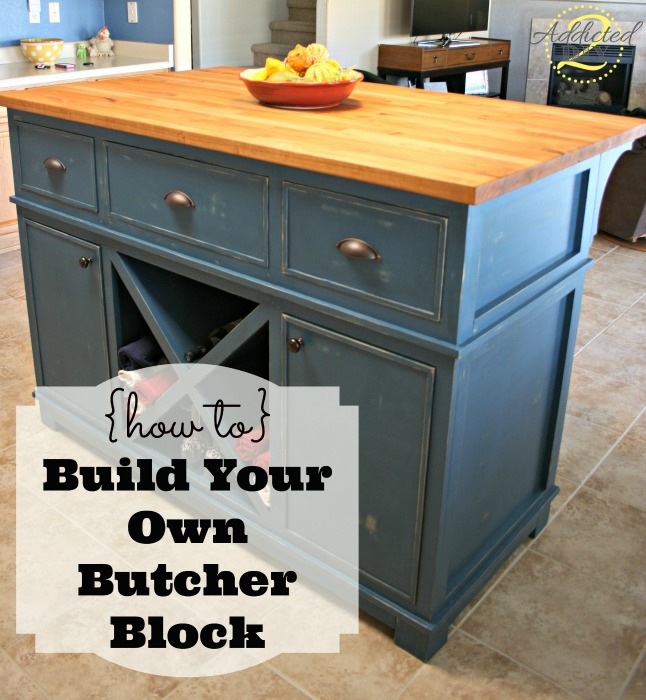
Earlier this week I shared how I built thiskitchen islandfor my mom. As promised, today I'm going to show you how I built the butcher block table top for it. I went back and forth, fretting over whether to build a butcher block table top or to buy one. When I say buy one, I mean my mom. She purchased all of the materials. I was the skilled "fly by the seat of my pants" labor. I searched high and low for a cheap butcher block countertop that would fit the specifications I needed, but they were crazy expensive! I thought about doing wide planks, but my husband warned me that they might warp after a while and that small planks were best. It wasn't until I saw thistutorialonSawdust and Embryosthat it finally clicked.
The most common wood in butcher blocks is maple because of its hardness. I had planned to use maple, but when I went to my localWoodworkers Source,I happened to see the knotty alder. It is a little softer than hard maple, but still a hard wood and when I discussed it with one of the employees, we both agreed it would be a fine choice for the island top. The best part is that it was half the price! I chose my boards and had another employee plane and rip the boards down into manageable sticks for me.
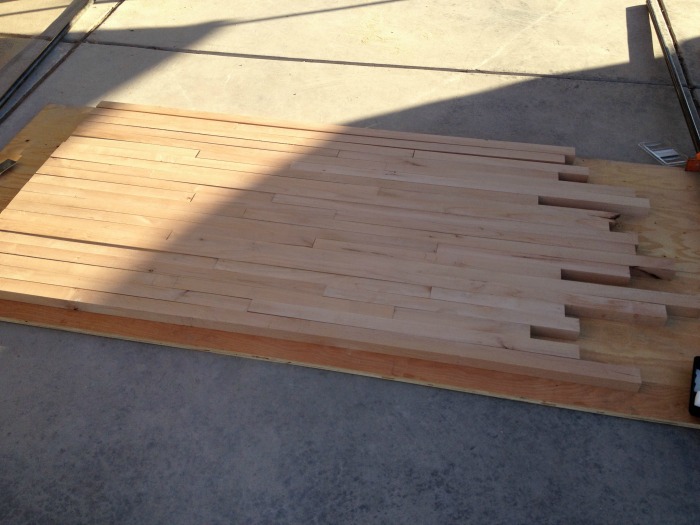
My wood was planed at 1 3/4″ thickness and I had it ripped into 1 1/2″ sticks. When I got home, I cut all of my long sticks into smaller pieces. I had to cut out some knots (they don't call it knotty alder for nothing), but that gave me the random patterns I was looking for. I turned the wood pieces on their sides so my slats were 1 1/2″ thick and 1 3/4″ wide.
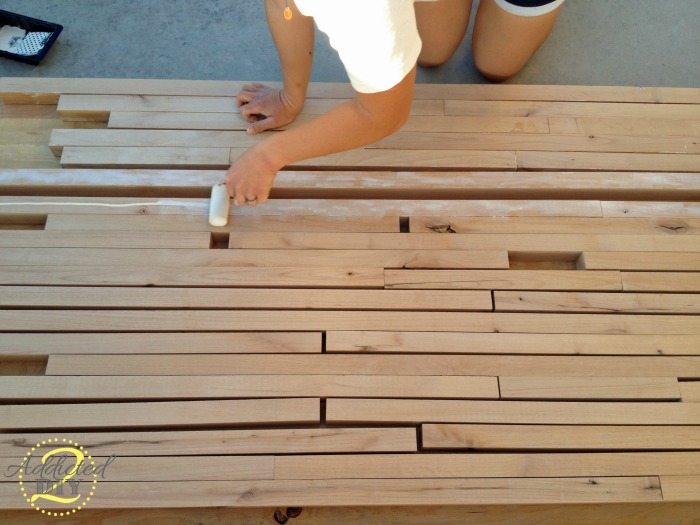
I got all of my clamps lined up and went to work. I used Titebond III
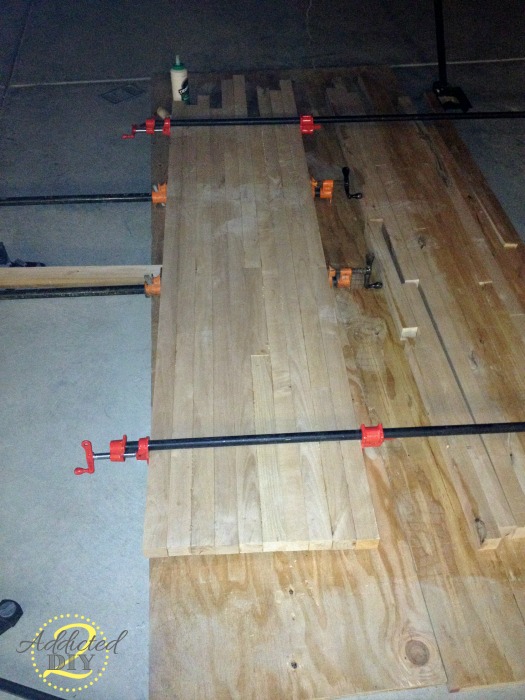
When sticking the pieces of wood together, use a mallet to pound any shorter pieces into a tight joint. Then clamp tightly using clamps on the bottom as well as the top. This prevents the glued pieces from bowing, which nobody wants. I only glued half on the first night. It was getting dark and I wanted to get dinner started before my husband came back from soccer practice with the boys.
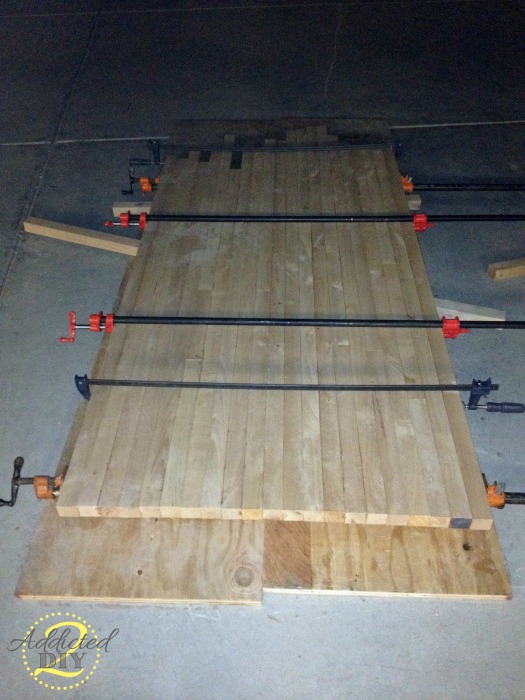
On the second night, I finished putting all of my pieces together and enlisted every long clamp we had in our garage to make sure those joints were tight. You'll have to forgive me for the bad night time pics. My time to work on things is either while my boys are in school or while they're in bed.
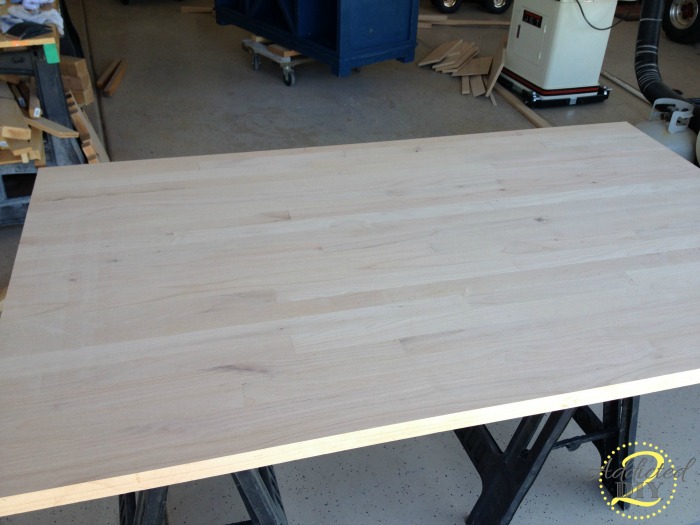
I let it set for 24 hours and then took it back to the wood shop and had them finish it off for me. They cut it down to size, squared up the ends, and then sanded it smooth for me. When all was said and done at the wood shop, the tabletop when from approx 1 1/2″ thick to a little over 1 1/4″ thick. When I got the table top back home, I used my orbital sander to round the edges and sand it completely smooth with 220 grit sandpaper.
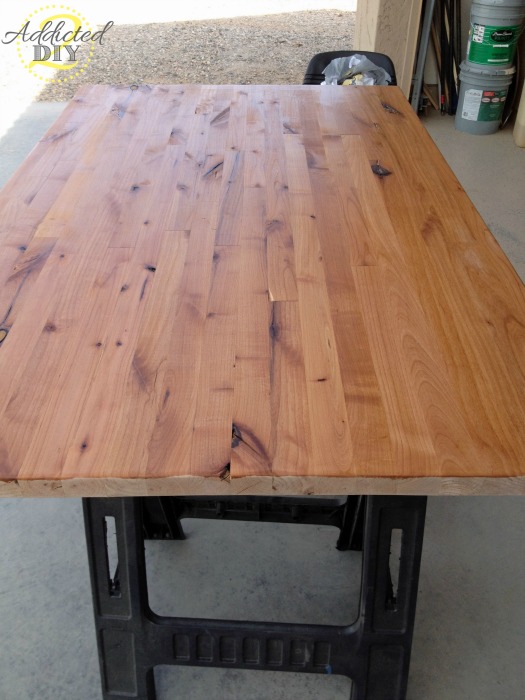
I used butcher block conditioner
It turned out so much better than I had imagined it would. To be perfectly honest, I was freaking out when I was gluing it all together. I was afraid it would have a lot of gaps or that it would just fall apart on me. Truth be told, there are a couple of tiny gaps where the ends didn't join perfectly together. The good news was that several websites I looked at said to use a mixture of beeswax and mineral oil to fill those gaps. Guess what the butcher block conditioner is made of? I just made sure to take extra care to put more of the conditioner in those little gaps.
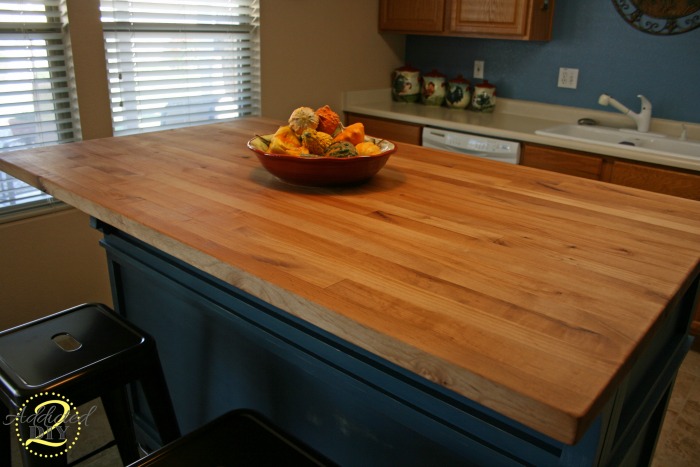
If you are looking to save a little money on your project, or if you are like me and you sometimes feel like it's not DIY unless EVERYTHING is done yourself, I hope you will find this tutorial helpful. If you have leftover wood like I do, you can also make some cutting boards with it. I'm thinking those would be fun Christmas presents.
I seriously love to hear your comments, so please let me know what you think! Also, sharing with friends, liking, pinning, and tweeting is always welcome!
~Katie
This post contains some affiliate links for your convenience. Please click to read my full disclosure policy.
muldoondinclect66.blogspot.com
Source: https://addicted2diy.com/how-to-build-your-own-butcher-block/
0 Response to "How to Make a Butcher Block Easy"
Post a Comment